
Southern Namibia – The land that time forgot
We have completed our 3589 km loop of southern Namibia and have returned to Walvis Bay to cool off. In Namibia, you can drive from the dry desert heat of 40⁰c to coastal coolness of 20⁰c in two hours! All thanks to the Benguela current that keeps the coastal sea temperature at 12⁰c.
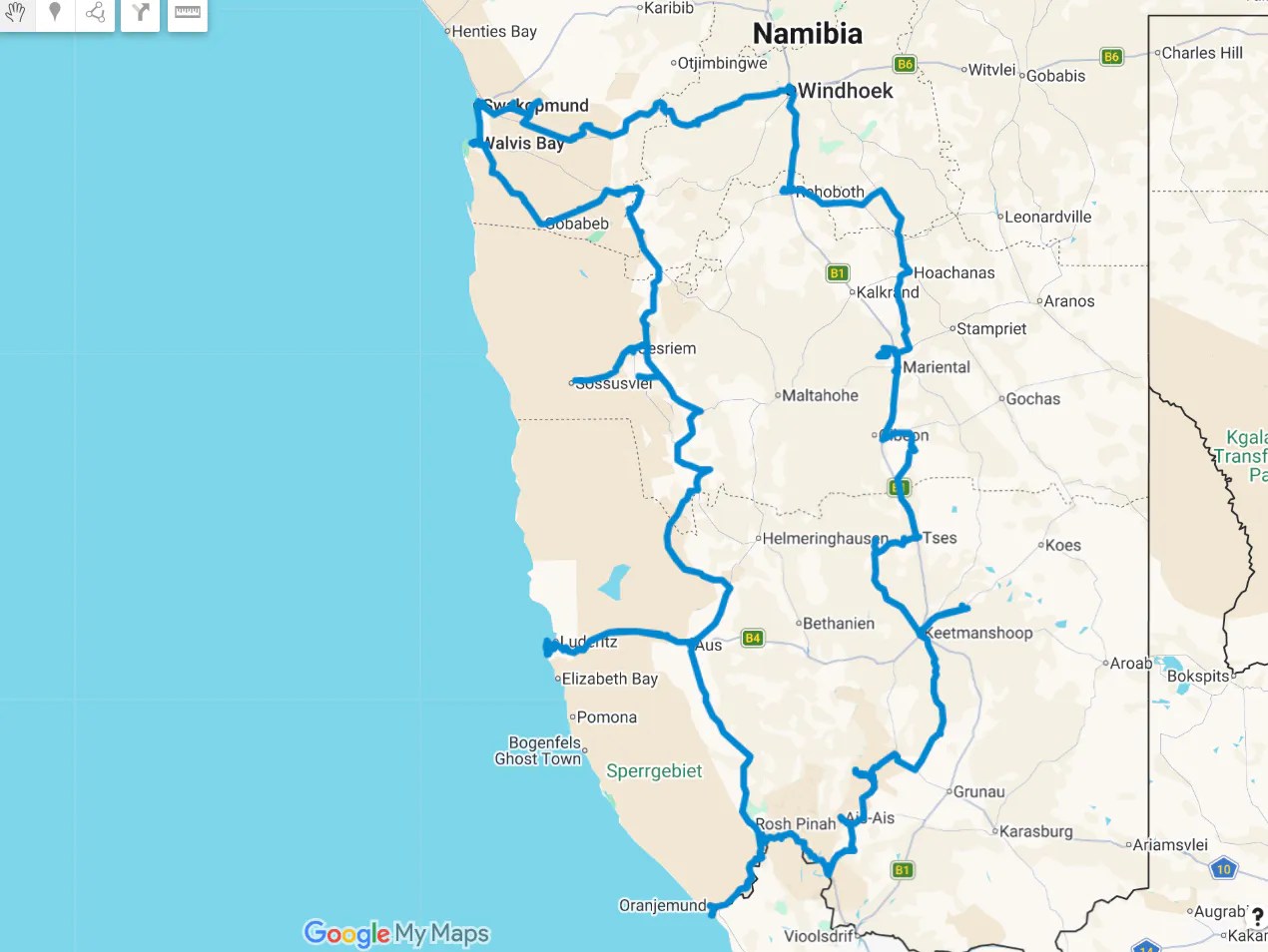
Southern Namibia has spectacular landscapes, but not so much game – that will come later in the north (providing we get there before the rains do and the game doesn’t leave the waterholes for the bush). Its roads vary between narrow and very busy arterial tar roads, to empty smooth gravel roads to nasty corrugated filling-loosening tracks.
There are definite tourist routes, which are busy with self-drive ‘backies’ (pickups with roof-top tents), but the minute you leave these routes, you very quickly find yourself alone for hours at a time. Here are some highlights of our southern loop.
Walvis Bay
Walvis Bay is mostly an industrial town, unlike its neighbour Swakopmund, which is much more touristy. At its southern end, it has a terrific corniche (with stunning houses) overlooking a lagoon with expansive wildlife, including a flamingo population. Before setting of for Swakopmund, we visited ‘Dune 7’, a massive, ~383-meter high sand dune located outside Walvis Bay and frequently cited as one of the tallest in the world.


Swakopmund
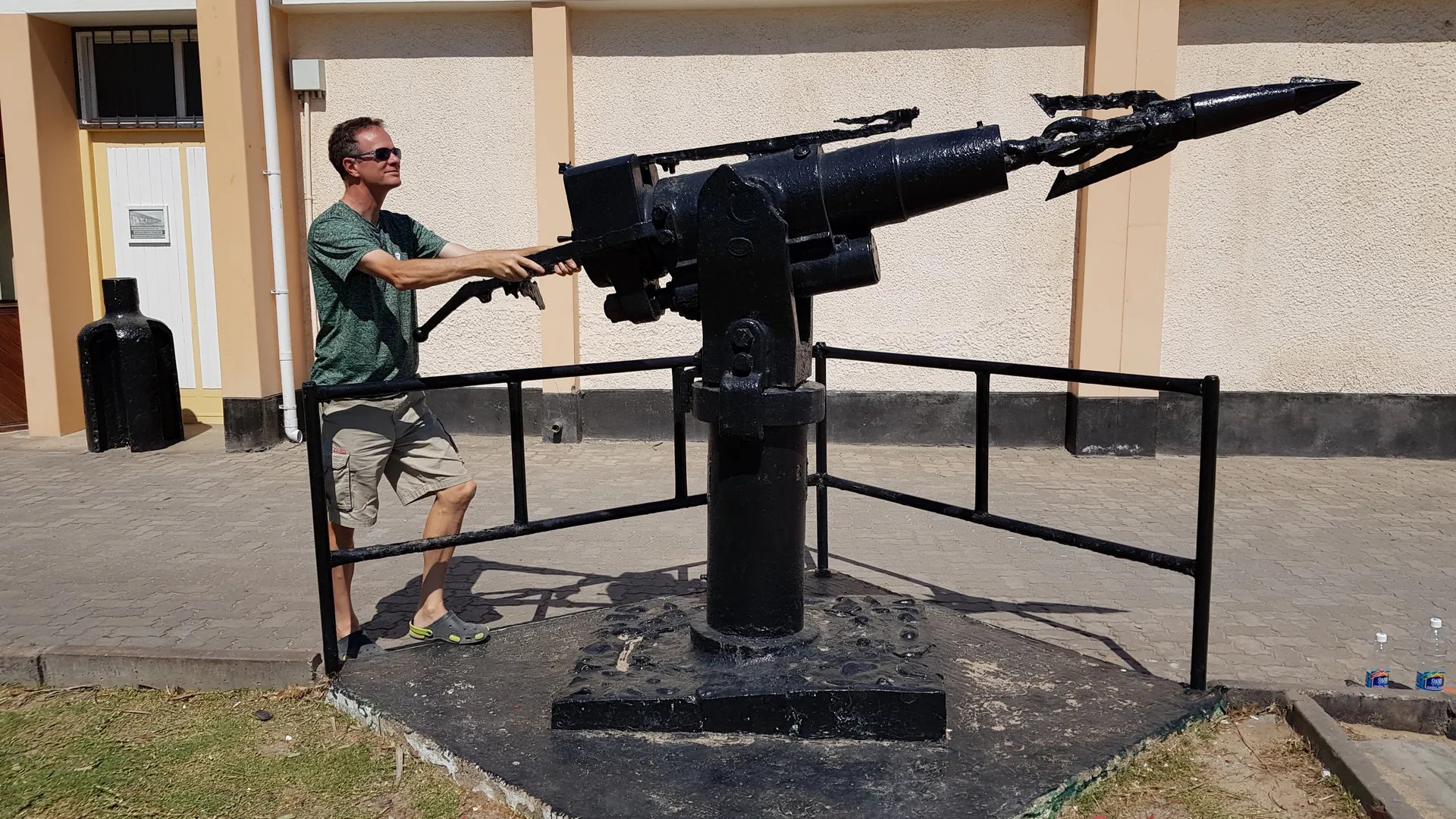
Swakopmund is a very likable, quiet and small town on the coast of Namibia a short distance up the coast from Walvis Bay. The temperatures are pleasant year round and it has a touristy vibe with plenty of restaurants and coffee shops. Francine took the opportunity to skydive here and really enjoyed it.




Naukloff
Leaving the coast cities, we head inland towards Windhoek and visit the Naukloff national park. Here we find ourselves off-road for the first time and we get to see our first Welwitschia Mirabilis – an ancient, long-lived plant native only to the Namib Desert, often called a “living fossil” dating back over 100 million years to the Cretaceous period. It lives for over 1,500–2,000 years by growing only two continuously splitting leaves from a woody, low-lying trunk, adapting to harsh arid conditions through coastal fog.


Windhoek
We returned to Windhoek, our airport of arrival into Africa, but haven’t said much about it. After flying in, we stayed in a very nice AirBnB whilst waiting for Big Bertha and explored the city. There isn’t that much to this Capital City, but what there is, is very nice. On our return, we stayed at the Urban Camp (overlander’s heaven) and had a meal at the famous Joe’s Beerhouse. Thinking we would need more refrigeration, and having an used bunkbed, we bought and fitted a second fridge.
German Heritage
On our way south we visited some old German forts and war graves, highlighting this European nation’s past influence in this country.


Mesosaurus Fossil Bush Camp
Just outside Keetmanshoop, this camp was located in a wonderful Quiver Tree forest and the colours as the sun set were jut phenomenal. The next day, the owner, Gael, gave us a tour of the fossils that have been found on the farm. In his words ‘one old fossil talking about old fossils’. He even played a tune on the rocks – can you guess what it is?


Canon Roadhouse
The roads in Namibia are long and barren, so when the opportunity arose, we stopped for a ‘cold one’ at the Canon Roadhouse. And soon after we spent the night at the De Klerk Boerdery.


Fish River Canyon
Fish River Canyon is a huge chasm and its hard to convey its scale with pictures – they do not do it justice.


Ai-Ais Hot Springs
We took a deviation to the hot springs, but frankly, the outside air was so hot we bypassed the hot spring and enhjoyed the pool instead.


Orange River
Forming the border between Namibia and South Africa, the Orange River is always in flow and the road that follows its course from Aussenkehr to Rosh Pinah is a spectacular drive. A green ribbon through the unforgiving desert landscape.


Sossus on Foot
We were the only guests at this camp thats defining feature was a small and illuminated waterhole to which mountain zebras come to drink at dusk. The zebras slowly drifted in and it was wonderful to sit in Big Bertha and watch them cautiously drink.


Oranjemund
Oranjemund is a small coastal town specifically built for the diamond mining community and until 2017 was off-limits to the public. Oryx roam through this quaint and not often visited town (it’s a 200km return trip off the tourist route and sits on the
border with South Africa) and we spent a couple of days here before returning to the interior’s desert heat. We didn’t take photos in the town, but we did see this interesting bottle tree on the way.

Aus
There is a population of about 100 feral horses here with deep roots in German colonial history, originating from abandoned military cavalry horses and farm animals during World War I. They survived over a century by adapting to harsh arid conditions and congregating at the Garub waterhole. We visited some German war graves whilst there.


Lüderitz
Lüderitz is another out of the way coastal town with a strong German influence. We spent our 22nd wedding anniversary exploring the town and ate lunch at a wonderful Portuguese fish restaurant. Just outside Luderitz is the mining ghost town of Kolmanskopp – the buildings are slowly being reclaimed by the sand and the town has become a major tourist attraction.


Sossusvlei
Sossusvlei is a salt and clay pan surrounded by high red dunes, located in the southern part of the Namib Desert, in the Namib-Naukluft National Park. Getting there involved traversing some rather bad washboard sand track, paying a large entry fee and then hiking the last stretch on foot in extreme heat. Nonetheless, the ancient trees are very photogenic!


Solitaire
The famous Solitaire cinnamon-spiced warm apple pie is served here at the McGregor Bakery. Founded by the late Percy “Moose” McGregor, the bakery is a mandatory stop for travellers between Sossusvlei and Walvis Bay. It lived up to its reputation!


Tropic of Capricorn
We crossed this a number of times and took the opportunity for some memorable pictures.


What a wonderful adventure
Thank you Carole.
Looks like you are having a very interesting time. Thanks for posting these great photos. Take care, Betty xx
Fab photos and experiences – enjoyxx
Firstly, Happy Anniversary!! Glad you found somewhere nice with wine to celebrate 😊 Lots of interesting places, photos, I especially liked the zebra pic. Tickling seals looks like fun but I’d be wary too with those teeth! Happy trails xx
Congratulations on your 22nd Anniversary. What an interesting way to enjoy it. So enjoy your photos and narrative,
Thank you Helen!!
Oh how I love your posts, short and to the point and very entertaining and interesting with unreal pics, keep them coming . We leave for Africa in 9 days, yippee
Thank you so much Jo. Have a great time in Africa. It is amazing!!
I am really enjoying reading your blog. You are having the time of your lives and I am so happy for you! Keep the news coming!!!!!
Just catching up on your adventures. How wonderful to see all three of the beaten path places! We’re in Cairo now. So let us know if you find yourselves in our neck of the woods!